

Steve Williamson
Money laundering is a menace affecting the economies and institutions all over the world. Peru has achieved a lot in enhancing its position against illegal financial operations in the country. The policies that the country has employed in its fight against money laundering are a combination of legal changes, regulatory oversight, institutional integration, and international collaboration. This is a detailed guide to the way Peru responds to money laundering, and its laws, systems, and practices that correspond with the international AML (Anti-Money Laundering) practices.
Knowledge on the Scope of Money Laundering in Peru
The economic activity of Peru, which is fuelled by mining, trade as well and banking, has been susceptible to money laundering in the past. The financial system has been provided with avenues through which illicit funds get into the system through criminal activities such as drug trafficking, corruption, and illegal mining. In reversing these threats, the Peruvian government has put in place stringent operations to trace, track, and intercept suspicious transactions.
To know what happens, it is important to know the placement of money laundering. The first step is placement, in which illegal money is introduced into the financial system, usually by deposit, exchange of currency, or acquisition of assets. Layering and integration then come next and conceal the sources of the illegal money. An example of money laundering in Peru might include the transfer of profits of illegal mining into legitimate businesses or offshore accounts to make it seem to be a legitimate income. These practical examples prove why it is essential to closely monitor and enforce them.
Legal Structure of Money Laundering Fighting
The legislation of money laundering in Peru is founded on the Law No. 27765, which outlaws money laundering and forms the foundation of the investigation and prosecution, enacted in 2002. Money laundering is a process defined by the law as covering or moving money that is the result of criminal activities with the aim of hiding its criminal source.
This law has been amended to increase the extent to which criminalization is applied and to provide asset forfeiture, and to modernize Peruvian law to comply with the FATF recommendations. This makes sure that the AML system of Peru is at world standards. The legal system also grants powers to freeze suspicious resources, confiscate illicit resources, and impose penalties on institutions that do not fulfil the requirements of AML.
In addition, the fact that Peru is a member of international conventions like the UN Convention against Corruption and the UN Convention against Transnational Organized Crime indicates a willingness of this country to cooperate in AML on an international scale. These conventions enhance the exchange of information on a cross-border basis and assist countries in country to bring forward complex, international cases of money laundering.
Organisational Design and Supervision
The Peruvian Financial Intelligence Unit (Unidad de Inteligencia Financiera del Peru, UIF-Peru) is the main central body that has the mandate of identifying and interpreting any suspicious financial transactions. The UIF operates under the Superintendency of Banking, Insurance and Private Pension Funds (SBS) and collects the information of the obligated organizations, such as banks, insurance companies, notaries, and casinos.
All these institutions are required to file a Suspicious Transaction Report (STR) when some irregularities are spotted. The UIF subsequently examines such reports and sends pertinent cases to the Public Prosecutor’s Office to prosecute them. Special departments of the National Police help in the process of gathering evidence and tracing finances.
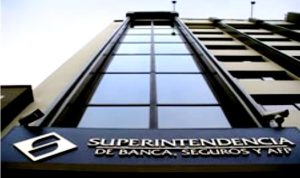
To guarantee adherence, the SBS undertakes regular AML audits on financial institutions. An AML audit focuses on whether a company has relevant controls, which help it identify and report suspicious transactions. The audit checklist that is usually applied by auditors includes the study of customer due diligence procedures, risk assessment, internal reporting system, and the training of employees. Such audits assist in detecting the weak areas and implementing accountability in the financial system.
Measures of Regulatory and Supervision
Money laundering is being fought at the frontline by financial institutions. According to the strict Know Your Customer (KYC), Customer Due Diligence (CDD) procedures used by banks in Peru, individuals have to prove their identity and determine the legitimacy of their transactions. Another approach used by regulators entails utilizing a risk-based approach, targeting high-risk clients, sectors, or regions of greater probability of illicit activity.
The SBS creates compliance by conducting regular inspections, and non-conformity may lead to administrative fines or criminal sanctions. Non-financial businesses like real estate agents, casinos, and notaries are also required to apply AML measures in the financial sector. Their presence seals the loopholes that criminals usually use to launder money via non-banking.
Digital Surveillance and Technology
Technology is a key to the changing AML situation in Peru. Modern digital systems have also been introduced to the UIF-Peru to facilitate handling of large amounts of transaction data and identify anomalies in a more efficient way. High-tech analytics tools assist in tracking how the funds move, revealing the hidden ownership structure, and finding the elaborate layering patterns that might represent laundering.
The new opportunities and challenges are also posed by the growing fintech sector within the country. With the rise in the popularity of digital payment systems and virtual currencies, regulators are putting in place frameworks to make sure that such innovations do not represent a backdoor to illegal finances. Virtual asset service providers (VASPs) are being tightened to ensure that cryptocurrencies are not abused to launder money.
To AML analysts, such developments must be constantly learned and adapted to. The AML analyst is an essential figure in the detection of red flags and decoding the data on transactions, as well as the maintenance of the compliance programs in accordance with the changes in technology. Their knowledge of traditional as well as digital laundering typologies is gaining popularity in the AML system of Peru.
Multilateral Collaborations and Self-Assessment
The AML development in Peru is also influenced by the active involvement of the country in international networks. Being a part of the Financial Action Task Force of Latin America (GAFILAT), Peru is subject to mutual review on a regular basis so that compliance with the recommendations of the FATF can be analyzed. Such reviews are used to determine strengths and weaknesses within the system and promote continuous improvement.
The nation also shares intelligence and best practices with other organizations like Organization of American States (OAS) and the Egmont Group of Financial Intelligence Units. Inter-border collaboration is particularly important in the context of monitoring money laundering incidents related to drug trafficking, illegal mining, and corruption- cases that usually go beyond the borders of Peru.
Difficulties and Continuing Changes
Although strong frameworks exist, there still exist challenges. The enforcement can be slowed down by a huge informal economy and scarce judicial resources. Sophisticated financial offences require proficient investigators and inter-agency effort. Peru is aware of this and has initiated some continuous reforms to enhance positive ownership disclosure, ease prosecution, and enhance training on AML.
The government is also spending on enhancing the inter-institutional communication systems to respond faster and more effectively to any suspected financial transactions. These reforms show that Peru is determined to remain on top of the changing methods of laundering and keep up with the global standards.
Awareness by the Public and Involvement of the Private Sector
Implementing AML efficiently needs both the government and the non-government to be involved. Banks should have internal compliance programs, have AML compliance officers, and staff members should be trained on Regulatory compliance. The UIF and SBS are encouraging the promotion of awareness campaigns to inform the people about the risks of money laundering and the need to report suspicious activity.

The partnerships between the private and the government will help in data sharing, enhance transparency and help Peru achieve the greater financial integrity objectives. The partnership between regulators, AML analysts, and other individual organizations will provide a common front against financial crimes.
Conclusion
The efforts made by Peru in fighting money laundering are a multi-faceted and progressive approach to the fight that integrates legal stringency, regulatory alertness, and technological creativity. The country has been reinforcing its AML ecosystem through regular enforcement, open administration, and cooperation with its international partners.
With the incorporation of quality AML audits, the use of the skills of the AML analysts, and the ongoing compliance with the FATF requirements, Peru is becoming a regional pioneer in financial transparency. Nevertheless, despite such difficulties, the active attitude of the country and modern systems show that the country is more than ever determined to fight money laundering.
